
From climate detectives to cooler streets: how Heat-Cool learning can support GP4Streets
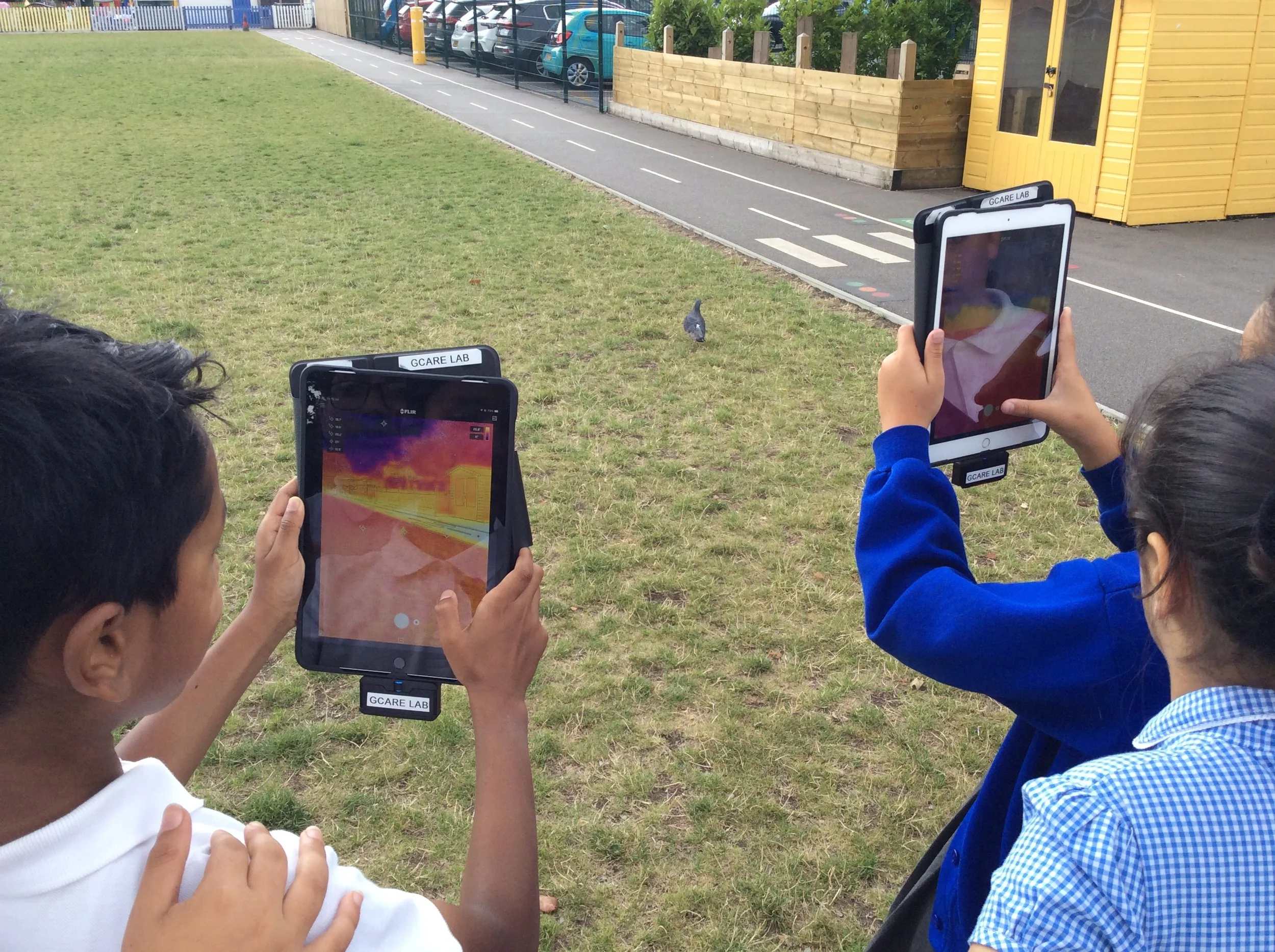
Primary school pupils across the South East have become “climate detectives” through the University of Surrey’s Heat-Cool programme, using thermal cameras to identify overheating in school grounds and explore cooling solutions such as green roofs, rain gardens, ponds and shaded spaces.
Led by Surrey’s Global Centre for Clean Air Research, the study involved more than 500 pupils at seven schools and analysed more than 1,700 thermal images across more than 4,300 objects. The findings showed that natural, water-based and engineered green infrastructure was typically one to three degrees cooler than nearby areas without it. More than eight in ten pupils maintained or improved their understanding of climate change after taking part.
The work connects directly with GP4Streets, which is developing do-it-yourself green-blue-grey infrastructure solutions to help shape greener, cooler and healthier streets. GP4Streets focuses on household and street-level climate adaptation and aims to co-design practical greening solutions with communities, researchers and stakeholders.
Heat-Cool shows how citizen science can help people understand local climate risks and identify practical solutions. Through GP4Streets, this participatory approach can be extended from school grounds to homes, streets and neighbourhoods, supporting communities to make evidence-led decisions about urban greening.
As hotter summers increase the need for local adaptation, GP4Streets will continue working with communities and partners to shape practical, evidence-led greening prescriptions for urban streets.
Find out more about GP4Streets and share your views through our surveys: https://www.gp4streets.org/gp4streets-survey