
Youth-led citizen science maps air quality disparities in São Paulo
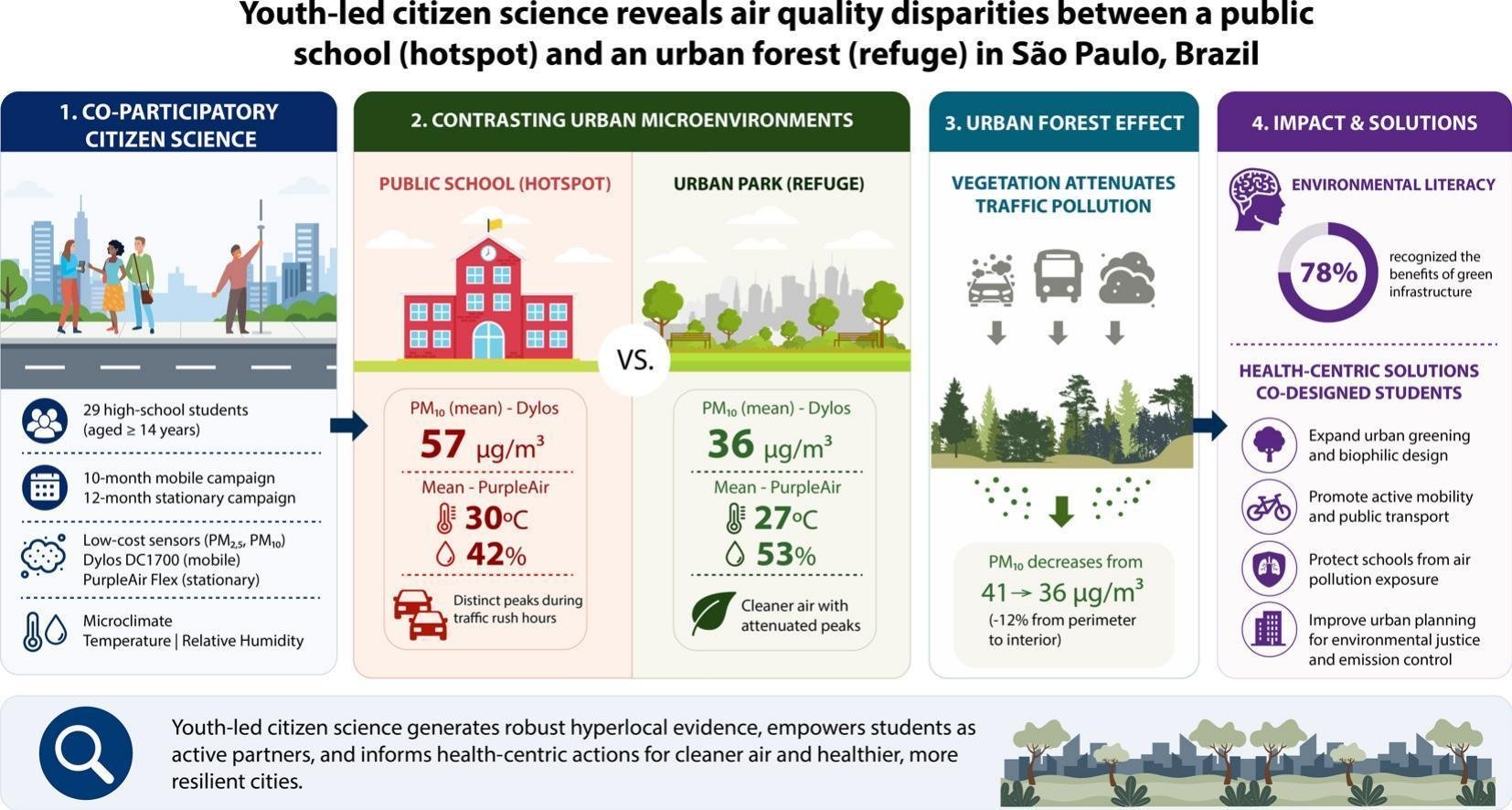
A new study shows how young people can help investigate air pollution in their own communities. Over ten months, high school students in São Paulo used low-cost sensors, participatory mapping and workshops to compare air quality at their school with conditions in the nearby Parque CienTec.
The school was found to be a local pollution hotspot, with average PM10 concentrations of 57 μg/m³ compared with 39 μg/m³ on surrounding streets. The nearby urban forest was cooler and cleaner, with average temperatures of 27°C compared with 30°C at the school. The project also strengthened students’ environmental knowledge, with 78% recognising the role of green infrastructure in reducing pollution and heat.
Read the full paper: https://doi.org/10.1016/j.teadva.2026.200168