
Green and blue spaces help cities stay cooler during heatwaves
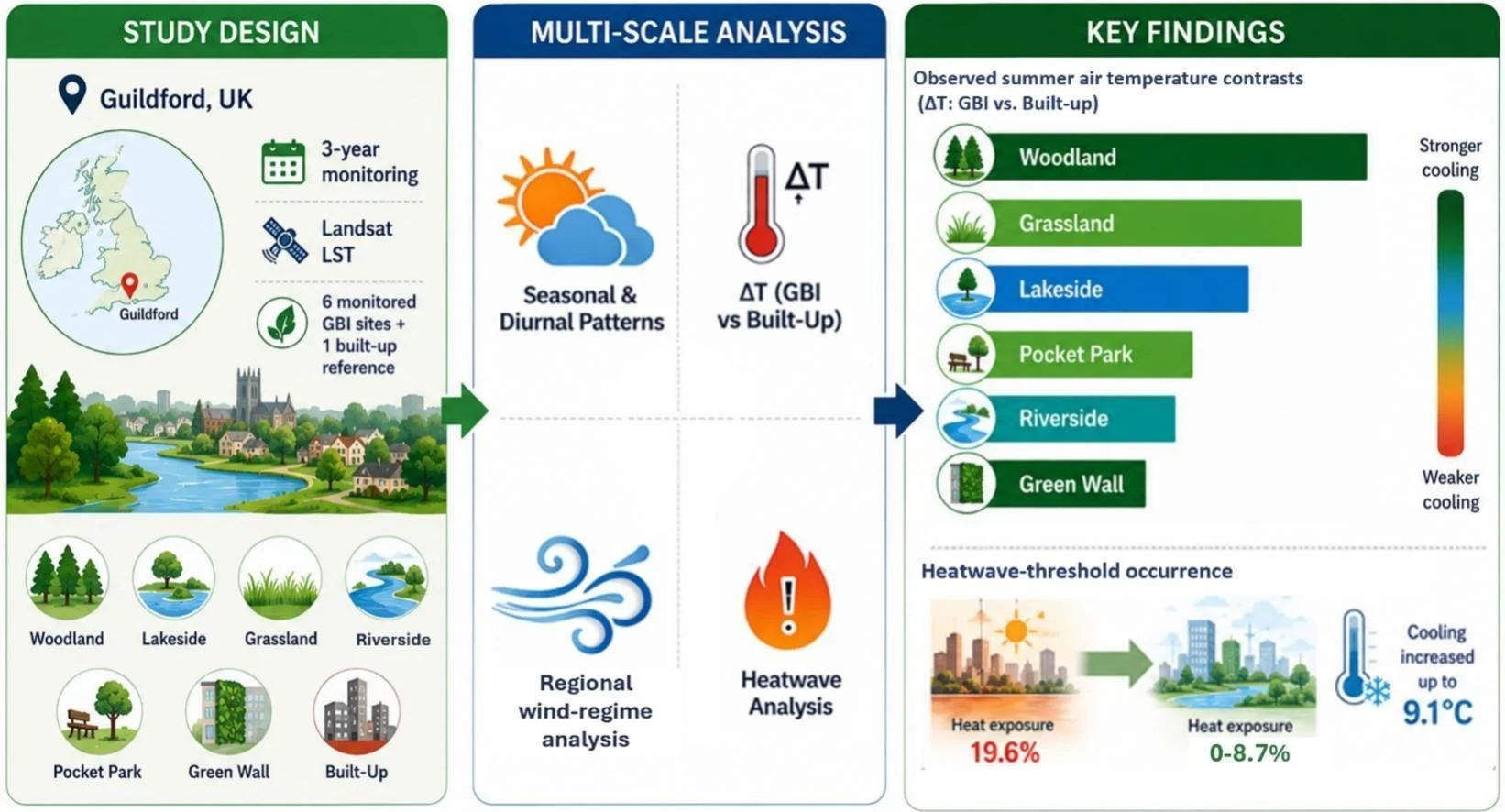
New research from the GP4Streets project shows how green and blue infrastructure can reduce urban overheating. Researchers monitored temperatures for three years across six sites in Guildford—woodland, lakeside, grassland, pocket park, riverside and green wall—and compared them with a built-up location. Satellite-derived land-surface temperature data were also used to provide a wider picture of local heat patterns.
During peak summer hours, the woodland, grassland and lakeside sites were up to 2.5°C cooler than the built-up area. The woodland site recorded no heatwave conditions during the monitoring period, compared with heatwave exposure during 19.6% of summer daytime observations at the built-up site. These findings highlight the value of trees, vegetation and water in helping towns and cities adapt to rising temperatures, while also showing that the cooling effect varies between different types of green and blue infrastructure.
Read the full paper: Microclimatic performance of greening against urban overheating